What to Expect from a Professional Vinyl Window Installation
Why Vinyl Windows Have Become the Standard
Over the past two decades, vinyl windows have quietly taken over the residential market in North Texas. Walk through any newer subdivision in the DFW area and you will see them everywhere. Builders and homeowners alike have moved away from aluminum and wood toward vinyl frames because they offer a solid balance of durability, thermal performance, and affordability. But the window itself is only half the story. The quality of the vinyl window installation determines whether that performance ever materializes in your home.
I have spent years working with replacement windows, and I can tell you that a poorly installed vinyl window will leak air, collect condensation, and fail long before the frame ever does. The difference between a drafty house and a comfortable one often comes down to the crew doing the work, not the brand name on the sash.
How Vinyl Frames Differ from Other Materials
Vinyl frames are hollow extrusions made from PVC. They do not conduct heat the way aluminum does, so they stay closer to room temperature on a cold morning. That alone cuts down on condensation and makes the interior more comfortable. But because vinyl expands and contracts more than wood or metal, the installation method has to account for that movement. A rigid, caulked-in-place approach that works fine for aluminum windows can crack the seals on a vinyl unit when the temperature swings from 20 degrees to 100 degrees, which happens regularly here.
Manufacturers like Pella, Milgard, and Simonton have refined their frame designs to include internal chambers that add rigidity and improve insulation. A good vinyl window installation will respect those chambers and never crush them by over-tightening screws or nailing the frame too aggressively. The frame needs to be plumb and square, but it also needs room to breathe.

The Two Main Installation Methods
Most residential vinyl window installations fall into one of two categories: nail fin installation for new construction or rough openings, and block frame installation for retrofit work. Nail fin installation uses a flange that wraps around the outside of the window frame. The flange gets nailed or screwed directly into the sheathing, and then the siding covers it. This method is fast and secure, but it relies heavily on proper window flashing to keep water out. If the flashing tape is skimped or the nail fin is bent during installation, water will find a way in.
For replacement windows, block frame installation is more common. The old window comes out, the opening is cleaned up, and the new vinyl window is set into the opening with shims and screws. There is no nail fin, so the gap between the frame and the rough opening must be sealed with foam and caulk. This method gives you more control over the fit, but it requires careful measurement and a steady hand with the foam gun. Too much expanding foam can bow the frame and make the sashes stick.
Why Proper Flashing and Sealing Matter
Window flashing is one of those details that gets overlooked on fast jobs. I have seen crews slap a bead of caulk around the exterior and call it done. That might hold for a season or two, but in a climate with heavy spring rains and high humidity, it will fail. A proper vinyl window installation includes a pan flashing at the sill, jamb flashing up the sides, and a head flashing above the window. The flashing directs water away from the opening and onto the surface of the siding. Without it, water pools against the frame and eventually works its way into the wall cavity.
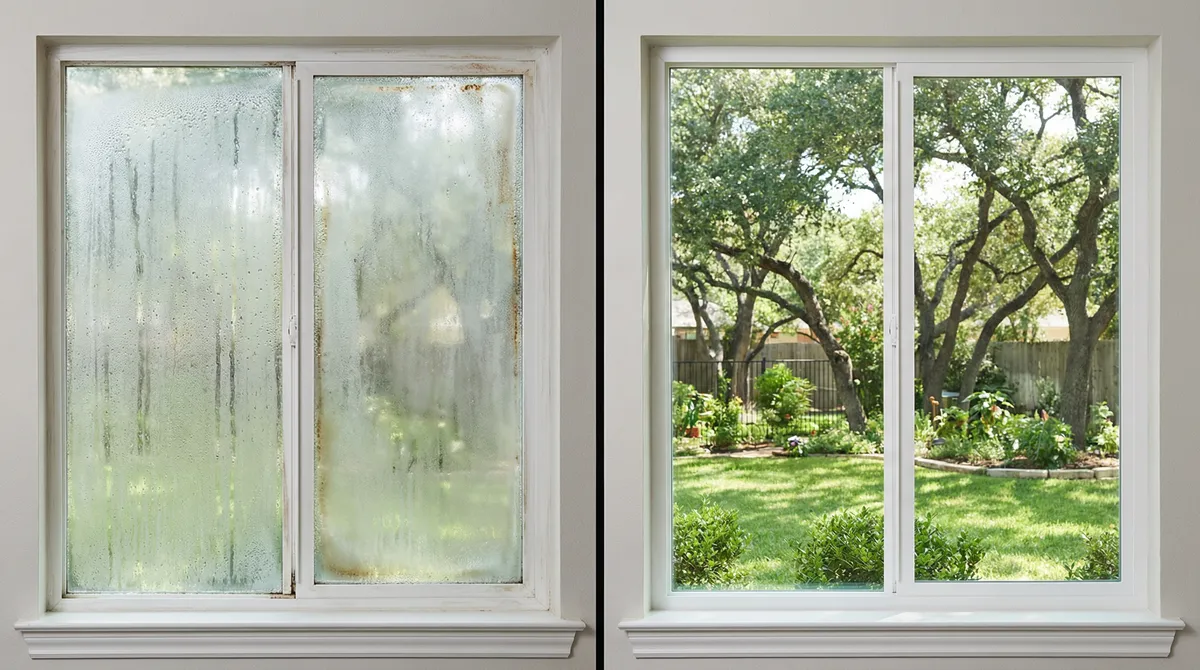
For double-hung windows, which are still the most common style in residential work, the flashing has to accommodate the lower sash track. If the track is blocked by caulk or debris, water can pond inside the frame. That leads to foggy glass repair calls down the line, because moisture gets between the panes and ruins the seal. Apex Windows handles a lot of foggy glass repair in the DFW area, and a surprising number of those cases trace back to an installation that did not manage water properly.
Glazing and Energy Performance
Vinyl windows themselves are just the frame. The glass package inside them determines the real energy performance. Most modern vinyl windows come with Low-E glass and an argon gas fill between the panes. Low-E glass reflects infrared heat back into the room in winter and keeps solar heat out in summer. Argon gas fill slows down heat transfer through the gap, so the interior surface of the glass stays closer to room temperature. Together, they can push a window assembly to an Energy Star rating, which matters for utility bills and comfort.
The National Fenestration Rating Council provides the ratings that tell you how a window performs. Look for the U-factor and solar heat gain coefficient on the label. A low U-factor means better insulation. A moderate solar heat gain coefficient is desirable in our climate because you want some solar warmth in winter but not too much in summer. The American Architectural Manufacturers Association sets standards for structural performance and water resistance. A window that meets AAMA standards has been tested for air leakage and water penetration. Installation that follows those standards is more likely to perform as rated.
Common Mistakes in Vinyl Window Installation
Even good windows can perform poorly if the installation is rushed. Here are a few of the most common issues I have seen:
- Over-tightening the frame screws, which distorts the vinyl and causes the sashes to bind.
- Skipping the backer rod behind the caulk, which leads to adhesion failure and cracking.
- Failing to level the sill, so water pools on the interior side of the frame.
- Using standard expanding foam instead of low-pressure window foam, which can bow the frame.
- Not accounting for the weight of the glass when shimming the frame, causing the window to sag over time.
These are not exotic problems. They happen on jobs every day, and they are the reason warranties often exclude labor. When you pay for a vinyl window installation, you are buying the installer's judgment as much as the window itself.
Retrofit Work and Whole-Home Replacement
For homeowners in the DFW area considering whole-home replacement, the process can feel overwhelming. Every window has its own quirks, especially in older homes where openings are not perfectly square. A professional crew will measure each opening individually and order windows to match. They should also inspect the surrounding framing for rot or insect damage before installing the new unit. If the rough opening is compromised, a new window will not fix it.
Apex Windows provides free estimates for whole-home replacement and commercial glass services. During the estimate, they look at the condition of the framing, the type of siding, and the access for the crew. That upfront assessment saves headaches later. It also gives the homeowner a clear picture of what the vinyl window installation will involve and how long it will take.

Warranties and What They Cover
Most vinyl window manufacturers offer a limited lifetime warranty on the frame and a shorter warranty on the glass seal. But those warranties almost always exclude installation defects. If the window leaks because the flashing was installed wrong, the manufacturer will point to the installer. That is why choosing a company that stands behind its work matters. Look for a warranty that covers both materials and labor for at least a few years. Some companies in the DFW area, including Apex Windows, offer warranties that give you peace of mind beyond the factory terms.
Final Thoughts on Getting It Right
A vinyl window installation done well will last decades. The frame will not rot, the glass will stay clear, and the seals will keep the weather out. Done poorly, the same window can be a constant source of drafts, condensation, and frustration. The materials are not exotic, but the craft matters. Take the time to vet the installer, ask about their flashing details, and make sure they use low-pressure foam. Your comfort and your energy bills depend on it.